
If you own an older home, an exterior house painting project is not the same kind of work as painting a modern build. Before you hire a crew for your next exterior house painting project, you should know what can go wrong.
Exterior paint damage older homes suffer often starts with a well-meaning paint job done the wrong way. Older siding, brittle trim, lead-based paint, and hidden wood rot all change the rules. Paint is there to protect the house. But when prep work cuts corners, paint can trap moisture and hide rot. The wrong pressure washing method can blast loose old siding.
Skipping containment can spread lead dust across your yard. This article breaks down the real risks of exterior paint damage older homes owners face during an exterior house painting project. It also covers the signs to watch for and what a safe approach looks like.
Key Takeaways:
- Homes built before 1978 likely have lead-based paint and fall under federal EPA rules.
- Pressure washing at the wrong settings can push water behind siding on a historic home.
- Painting over wood rot traps moisture and often doubles the damaged area within one season.
- Wood must measure below 16% moisture content before paint will bond.
- Exterior paint damage older homes experience often starts with poor prep, not bad paint.

Why Older Homes Need a Different Approach
The median U.S. home is now 44 years old. Nearly half of owner-occupied homes were built in 1980 or earlier. Many of these homes have original wood siding, layers of decades-old paint, and repairs made in looser eras. That history matters. Homes built before 1940 are about 30 times more likely to be in poor condition than homes built after 2022. They also cost around 10 times more in yearly upkeep.
So an exterior house painting project on a 1920 bungalow is closer to a restoration than a refresh. The common sources of exterior paint damage older homes deal with fall into four buckets. Those are lead paint mishandling, pressure washing the wrong way, painting over rotted wood, and skipping moisture checks. Each one is avoidable. Each one is also common.
Lead-Based Paint Changes the Rules
If your home was built before 1978, assume it has lead-based paint somewhere on the outside. The federal government banned lead-based paint from housing in 1978. Any pre-1978 home is treated as potentially contaminated under federal law. The EPA’s Renovation, Repair, and Painting Rule applies to any paid work that disturbs more than 20 square feet of exterior painted surface. That scope covers most of an exterior house painting project plan. Firms must be EPA-certified. At least one worker on site must be a Certified Renovator trained in lead-safe work practices.
Hiring an uncertified crew can turn a simple repaint into a health and legal problem. Scraping or sanding old lead-based paint without containment spreads lead dust across your yard. It also settles into the soil around your foundation. Children and pets are most at risk. You can read the rule directly on the EPA’s Lead Renovation, Repair and Painting Program page.
Before any crew touches your historic home, ask them to show proof of firm certification. Ask for the name of the Certified Renovator who will be on site that week.
Pressure Washing Can Ruin a Historic Home
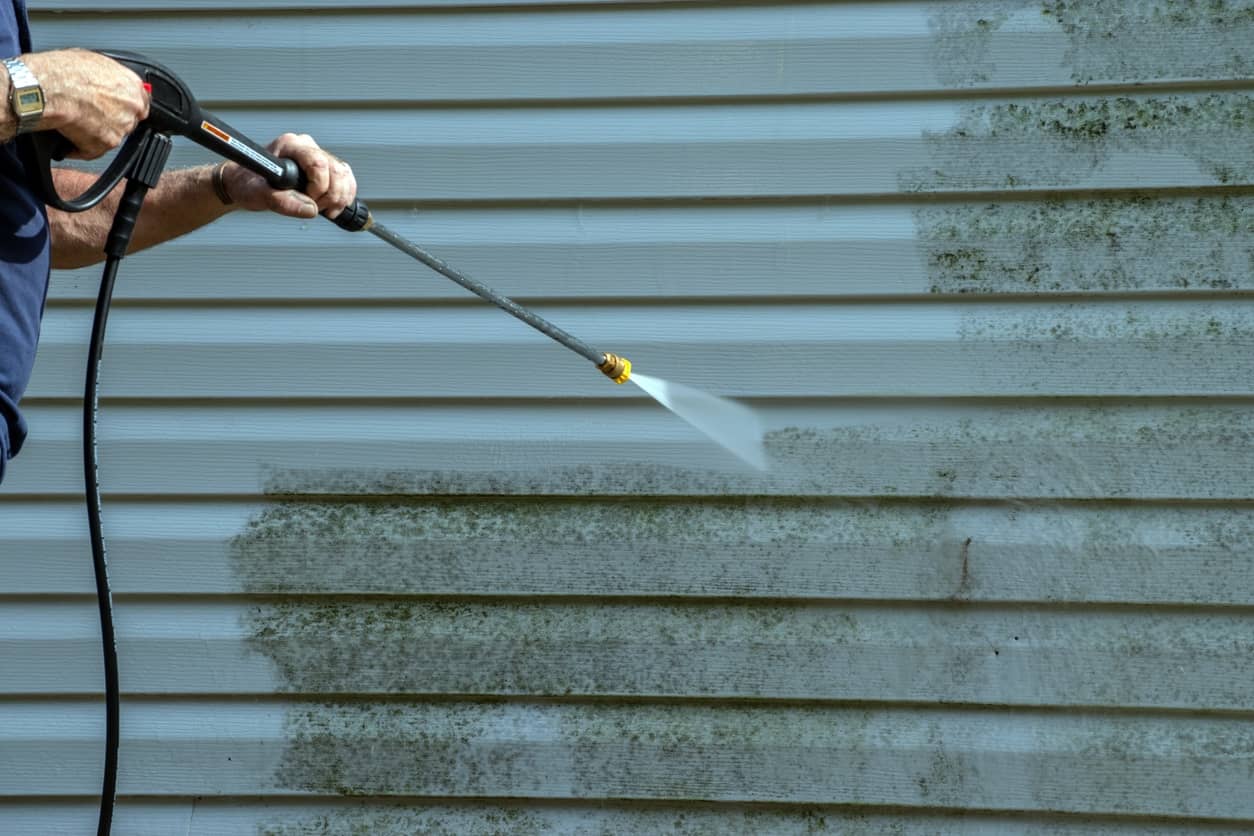
Most painters use pressure washing before prep. On a modern home with fiber cement siding, that step is fine. On an older home with wood clapboard, cedar shingles, or aged brick, pressure washing can cause lasting damage. Standard pressure washing rigs push out 3,000 to 4,000 psi. Soft wood siding, crumbling mortar joints, and thin historic trim can be carved, fuzzed, or blasted loose at that pressure. Once water gets behind clapboard, it can take weeks to dry out. By then it has soaked insulation and framing.
On a pre-1978 home, high-pressure water sends lead-based paint chips and dust into the air. Those particles land in the soil around the house. So the practice becomes both a code issue and a health issue.
A careful approach uses soft washing under 1,500 psi with biodegradable cleaner. Some historic homes call for hand scrubbing with a brush and low-pressure rinse instead. The cleaning takes longer. But it protects the siding and keeps old paint contained. If a crew shows up with a 4,000 psi rig and no plan for containment, that is a red flag. That is how exterior paint damage older homes owners pay for later gets started.
Painting Over Wood Rot Makes It Spread
Wood rot is a living fungal process. It feeds on moisture and keeps spreading as long as water is present. Paint does not stop wood rot. It seals the moisture in and hides the decay while the fungus keeps eating. Within one freeze-thaw winter, painted-over wood rot often produces blistering and cracking. The exposed damage can be twice the original size. So a small patch of soft fascia becomes a full board replacement. A soft spot in a windowsill becomes a frame rebuild.
The right sequence on any older home goes like this:
- Find and fix the moisture source, such as gutters, flashing, caulk, or grading.
- Cut out every bit of soft, crumbling wood past the damage line.
- Let the cavity dry for 24 hours or longer.
- Reinforce with epoxy wood hardener and filler, or replace the board.
- Prime all sides of new wood before installing it.
- Apply two coats of quality exterior primer and paint.
Shortcuts at any step bring wood rot back. On a historic home, that usually means tearing out trim that was original to the house. Avoiding that loss is the whole point of good paint prep.
Moisture Content Decides Whether Paint Sticks
Wood needs to read below 16% moisture on a meter before paint will bond. Above that reading, paint peels within months. The sealed paint film also traps water that feeds wood rot.
Older siding holds moisture longer than new wood. That is because the fibers are softer and the back sides are often unsealed. A painter who skips the moisture check is guessing.
On an older home, guessing is how peeling paint shows up by next summer. It is also how the cycle of exterior paint damage older homes owners notice turns into yearly callbacks. A simple moisture meter solves the problem. Ask any crew you interview if they use one on every job.
Signs Your Older Home Needs Real Paint Prep
Before you sign a contract, walk around the outside of your home. Look for these warning signs:
- Alligator-patterned paint cracks, especially on south and west walls
- Soft, spongy, or dark spots on trim, fascia, or window sills
- White or gray powder on old painted wood
- Paint peeling in sheets rather than small flakes
- Gaps in caulk around windows, doors, and corner boards
- Dark streaks running down siding under gutters or flashing
Any one of these is a sign that a repaint alone will not hold. A crew that brushes these off as cosmetic will leave you with worse problems a year from now. Thorough paint prep addresses each of these before the first drop of paint goes on.
What a Safe Exterior House Painting Project Looks Like
A painter who knows older homes brings a specific set of tools and habits to your exterior house painting project. Look for these standards:
- EPA RRP firm certification and at least one Certified Renovator on site.
- A written containment plan for lead-based paint chips and dust.
- Soft washing equipment under 1,500 psi instead of high-PSI pressure washing.
- A moisture meter and clear thresholds for when to paint.
- Carpentry skills or a partner carpenter for wood rot repair.
- Oil-based or shellac primer for bare wood and tannin-heavy species like cedar.
- Two full coats of quality exterior paint applied in the right temperature window.
Anything less puts your home at risk of exterior paint damage older homes never asked for. Good paint prep and certified work are what separate a coating that lasts a decade from one that fails in a year.
Protect Your Historic Home with a Crew That Respects It
Exterior paint damage older homes accumulate over decades does not get fixed with a fresh coat. It gets fixed with paint prep, patience, and a crew that respects what your home already is.
At Rojas Painting, we treat every exterior house painting project on an older or historic home as a chance to extend the life of what is already there. Certified. Careful. Straight with you about what your home needs and what it does not.
Call 707-353-7471 for a walk-through and a written scope. It should start with your home, not with a pressure washer. Your older home has stood for a long time. The next coat of paint should help it stand longer.

