
Most homeowners don’t think much about how paint gets onto a house — just that it looks good when the job is done. But when you’re hiring exterior house painters or thinking about tackling a project yourself, the method used matters more than most people realize. The right exterior painting methods can mean the difference between a finish that lasts a decade and one that starts peeling in two years.
So what’s the right call — brush, roller, or sprayer? The honest answer is: it depends. This post breaks down each method so you can ask better questions, spot red flags, and feel confident about what’s happening to your home.
Key Takeaways:
- Brushing gives you the most control and the best penetration into wood grain — but it’s slow.
- Rolling covers large flat surfaces quickly with a thick, even coat — but struggles on detail work.
- Spraying is the fastest exterior painting method for large areas, but prep and masking requirements are significant.
- Most professional exterior house painters use a combination of all three — not just one.
- The method should match the surface, not just the schedule.
- A rushed application — regardless of method — leads to early paint failure.
Why the Method Actually Matters
Here’s something most paint companies won’t say out loud: a $60-per-gallon paint applied poorly will fail faster than a $30-per-gallon paint applied correctly.
The exterior painting method your painter chooses affects how well the paint bonds to the surface. It affects film thickness. It affects how the paint holds up against rain, UV exposure, and temperature swings.
A homeowner who doesn’t know this is in a tough spot. You’re trusting someone to make the right call on your behalf — and you have no real way to check their work until months later, when problems show up.
That’s the internal problem most homeowners carry into this: I don’t want to get taken advantage of. I don’t want to spend thousands and be left with a job that fails.
Understanding the basics of exterior painting methods puts you back in control of that conversation.
The Brush: Slow, Thorough, and Hard to Replace
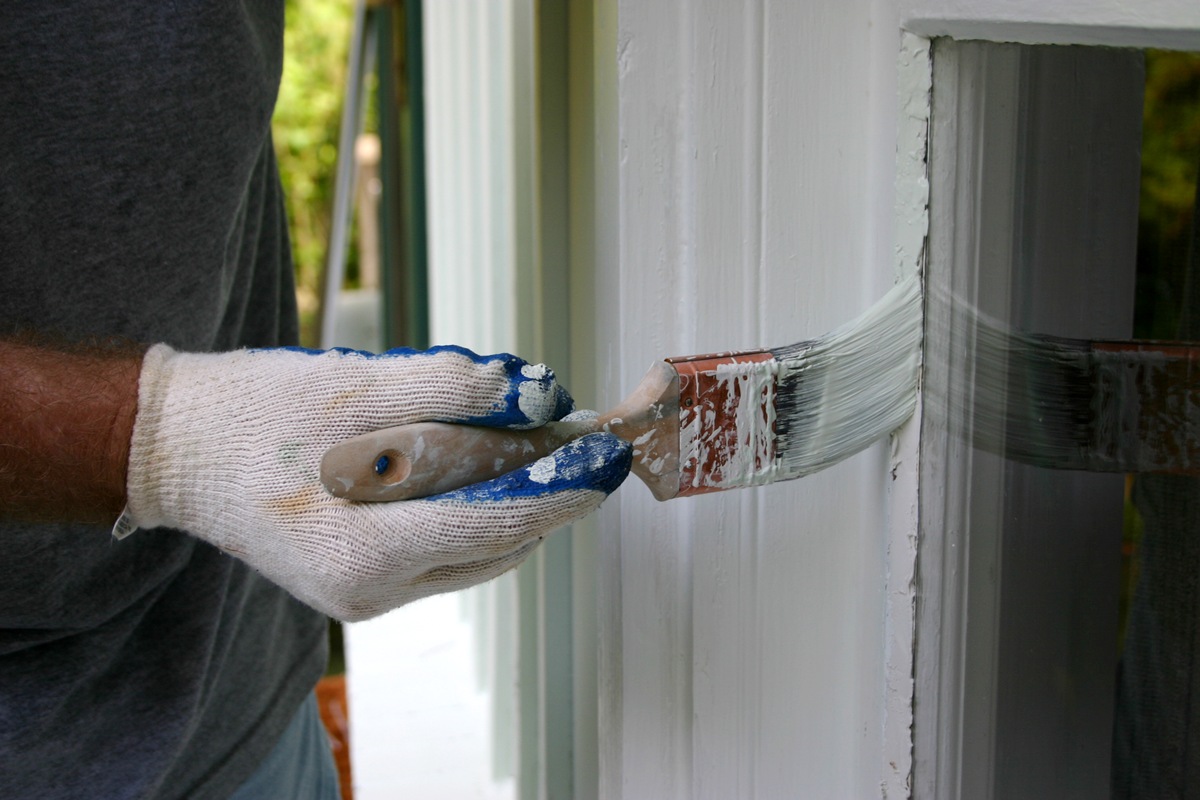
Brushing paint onto a surface is the oldest exterior painting method — and it still has a place on every professional job.
A brush forces paint into the grain of wood, into crevices, and around edges. This mechanical action creates what painters call “bite” — the paint physically bonds with the surface rather than just sitting on top of it.
Brushwork is the right call for:
- Window and door trim
- Corners and edges
- Areas where masking isn’t practical
- Old wood siding with deep grain or rough texture
- Touch-up work and cut-in areas
The downside is speed. Brushing a full house exterior by hand would take longer than most homeowners want to wait — and labor adds up fast. That’s why brushing is typically used alongside other exterior painting methods, not as a standalone approach.
If a painter tells you they’re brushing the entire exterior of a two-story home, that’s worth a follow-up question. It’s not impossible — but it’s unusual.
The Roller: The Workhorse for Flat Surfaces
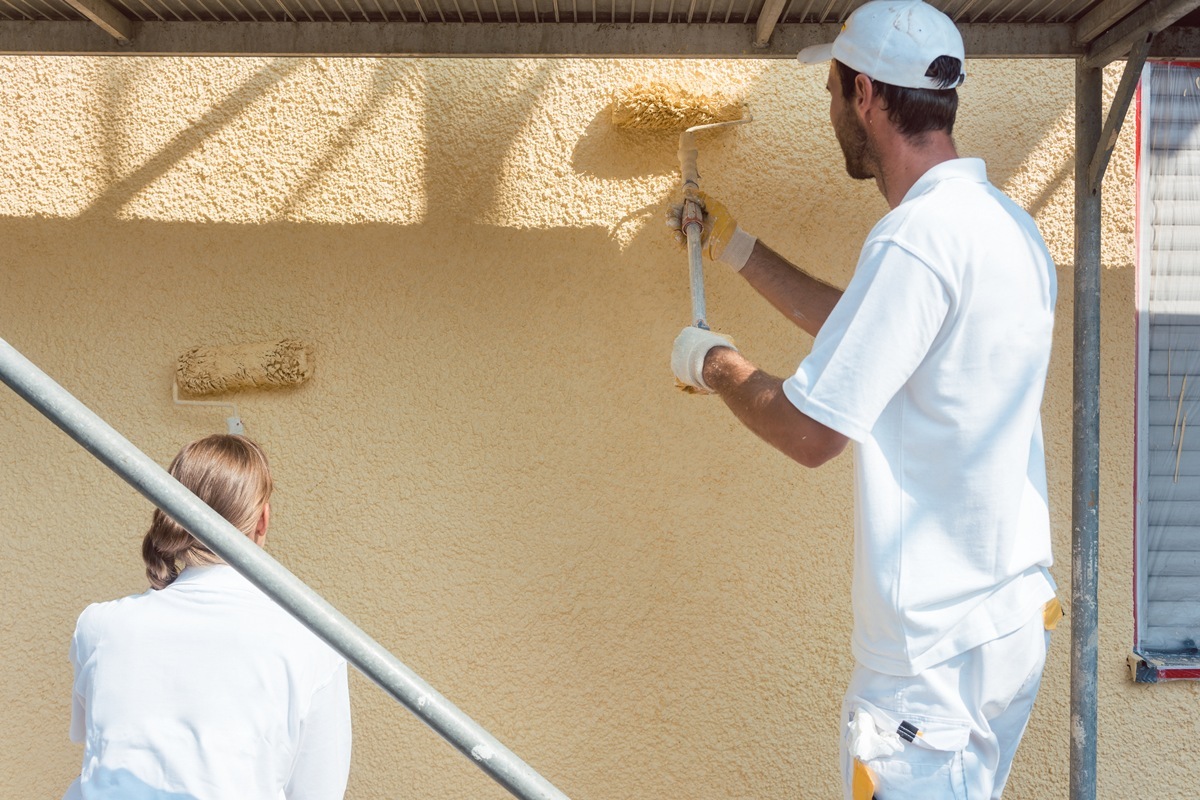
Rolling is one of the most reliable exterior painting methods for large, flat surfaces — things like stucco, smooth fiber cement, or wide wood board siding.
A roller lays down a thick, consistent film of paint quickly. It’s faster than brushing and gives you more control over coverage than spraying. Rollers are especially useful when working near areas that are hard to mask — a neighbor’s car parked close by, a garden bed, a fence line.
Rollers work well for:
- Stucco and masonry walls
- Wide, flat siding boards
- Areas where overspray would be a problem
- Situations where spray equipment isn’t practical
One limitation: rollers can’t get into tight spaces. They don’t work well on detailed trim, narrow profiles, or rough textures that require paint to be worked in manually. A roller leaves more texture than a sprayer, which can be a benefit (better adhesion on rough surfaces) or a drawback (less smooth finish on flat panels).
The Sprayer: Fast, Even, and Demanding
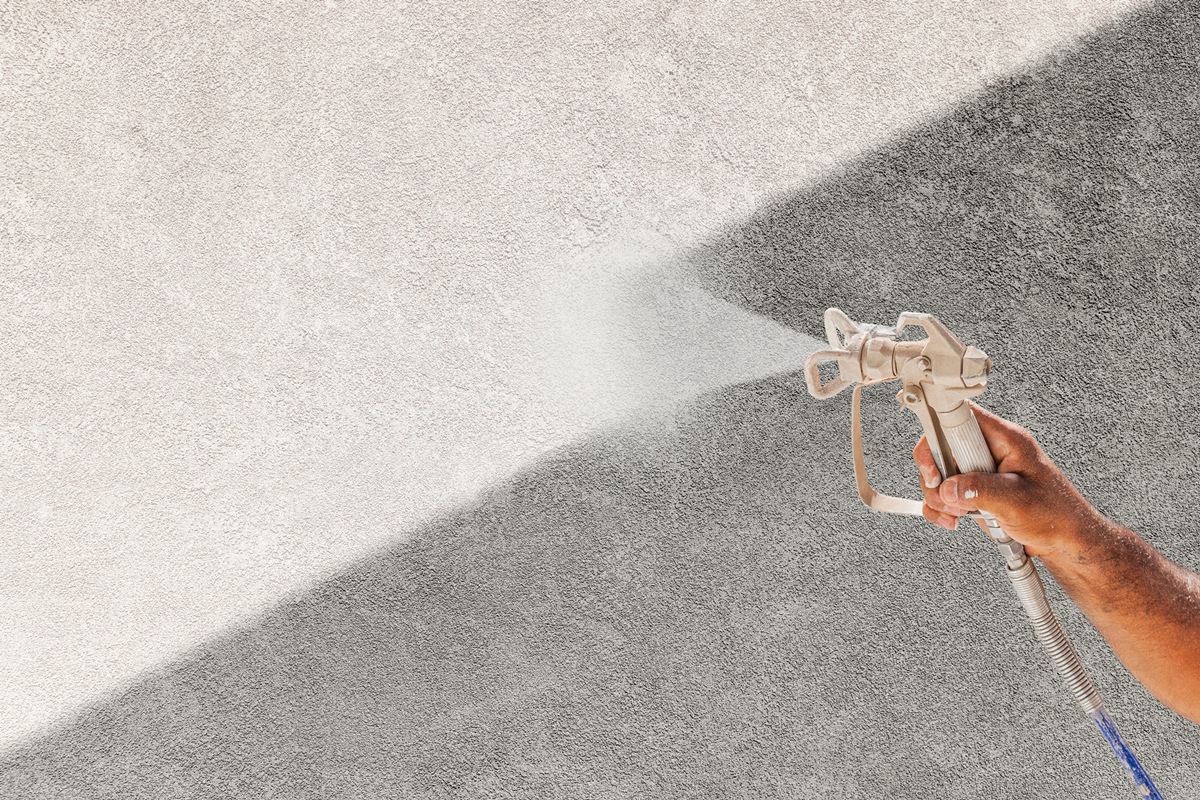
Spray application is the exterior painting method that looks the most impressive to watch. A skilled sprayer can cover a wall in minutes, laying down a smooth, even coat across a large surface area with no brush or roller marks.
But there’s a catch — actually, a few of them.
Prep is everything with spray. Before a single drop of paint hits your house, every window, door, light fixture, outlet cover, shrub, deck, and nearby surface needs to be masked and covered. Overspray travels farther than most people expect, especially on windy days. Skipping prep with a sprayer doesn’t save time — it creates costly cleanup and damage.
Wind matters. Spraying in gusty conditions causes uneven coverage, wasted paint, and potential damage to neighboring properties. Professional exterior house painters check weather conditions before setting up spray equipment.
Film thickness requires attention. It’s easy to apply paint too thin with a sprayer, especially at higher distances. A single spray coat often isn’t enough — most jobs require a back-roll (running a roller through fresh spray) or a second coat to hit the right film thickness for durability.
Spray works well for:
- Large, open wall areas with good access
- Smooth or lightly textured siding
- New construction where masking is easier
- Situations where speed is a real priority
If someone is spraying your home without thorough prep, that’s a problem — not a shortcut.
What Most Professional Exterior House Painters Actually Do
Here’s the part that surprises a lot of homeowners: the best exterior house painters don’t rely on a single method. They use all three, depending on where they are on the house.
A common workflow looks something like this:
- Spray the main body of the house for coverage and speed
- Back-roll the sprayed areas to work paint into the surface and even out the film
- Brush all trim, edges, corners, and detail work
This combination approach pulls the advantages from each exterior painting method and minimizes the weaknesses. It’s slower and more labor-intensive than spraying alone — which is exactly why lower-bid painters sometimes skip steps 2 and 3.
When you’re evaluating quotes, ask directly: Which exterior painting methods do you use on the body? On the trim? Do you back-roll after spraying?
A painter who can answer those questions clearly, without hesitation, has done this before.
What Can Go Wrong When the Wrong Method Is Used
Paint failure is rarely about the paint itself. Most early failures trace back to application problems.
Here are a few common scenarios:
- Spray-only application without back-rolling leaves a thin film that peels faster, especially on wood siding that expands and contracts with humidity changes.
- Rolling over a surface that needs brushwork misses paint penetration in grooves and grain. The paint looks fine at first but loses adhesion at the edges over time.
- Brushing over a surface that needs spraying can leave brush marks visible in certain lighting — particularly on large, smooth panels where uniformity matters.
- Any method applied over unprepared surfaces fails. No exterior painting method overcomes peeling old paint, bare wood without primer, or dirty surfaces that weren’t washed first.
The method is one piece of the puzzle. Prep, primer, and product selection all play a role too.
How to Choose the Right Exterior Painting Method for Your Home
You don’t need to make this call yourself. That’s what you’re hiring exterior house painters for. But you do need to know the right questions to ask.
Before signing with any painter, consider asking:
- What exterior painting methods will you use on the main siding?
- Will you back-roll if you spray?
- How will you handle trim and detail work?
- What surface prep is included before any paint goes on?
- How will you protect my landscaping, windows, and adjacent surfaces?
Their answers will tell you more than their price will.
What a Good Exterior Paint Job Actually Looks Like
When the right exterior painting methods are used on a properly prepared surface with quality paint, the result lasts. Most quality exterior paint jobs on residential homes hold up for 7 to 10 years before needing attention, depending on climate, exposure, and the paint product used.
You shouldn’t see brush marks on large flat surfaces. You shouldn’t see thin coverage on edges. You shouldn’t see roller texture where a smooth finish was the goal.
What you should see is consistent color, clean edges, and a surface that looks like one continuous piece of work — not a collection of separate efforts.
Ready to Talk About Your Home?
You’ve spent time learning how exterior painting methods work. Now it’s worth having a real conversation with someone who applies that knowledge every day.
Rojas Painting works with homeowners who want a straight answer about what their home needs — and a clear plan before anyone picks up a brush.
Call 707-353-7471 to set up a walkthrough. No pressure, no guesswork. Just an honest look at your home and a recommendation you can trust.

